Bilingual websites.Local connections.
Two voices, one S.
My goal is to launch three affordable, mobile-ready bilingual websites for two Hispanic-owned small businesses and one church or community organization, then test whether visitors can find key information and a way to make contact without help.
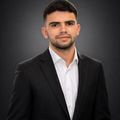
A project byJean Segura · Spartanburg Methodist College
Estimated project progress
My current estimate of overall project progress.
See milestones and results01 / The purpose
Good work deserves to be seen.
My dad paints houses here in the Upstate. He is good at it. The people who hire him call him back, and they tell their neighbors. But for years, if you searched for his company online, you found nothing. The work was excellent and invisible at the same time. So I built him a website. That is where this started.
Since 2022, I have helped with estimates, invoices, scheduling, and customer communication for Segura's Painting. Building the website grew out of that everyday work.
Why Segura's Solutions?
Segura is my last name. In Spanish it means safe. And that is really what this is about. When someone is looking for a painter they have never met, they are trying to figure out if that person is safe to hire. If there is nothing online, they never find out.
Two voices. One conversation.
Two speech shapes form the S in Segura's Solutions, representing a conversation between English and Spanish. That idea guides this project: helping owners and customers understand each other and connect.
Planned clientsTwo Hispanic-owned small businesses and one church or community organization.
How I'll work
Listen first
Agree on the client's priorities and the information visitors need.
I build; clients review
I design and build each site, then review the design and English and Spanish content with the client.
Share & improve
Promote the finished sites, observe real users, and fix what gets in their way.
Research behind the project
The 2022 Annual Business Survey counted 406,086 Hispanic-owned employer firms in 2021. Construction led with 70,571 firms; 25.2% of Hispanic-owned employer firms across all sectors were family-owned. These figures establish the scale of the community, not how many have websites.
Clutch's 2025 survey found that 17% of surveyed U.S. small businesses had no website. Among those without one, 28% had no online presence, and over a third considered a website irrelevant. These national survey results are context, not a local needs assessment.
Census QuickFacts estimates Spartanburg County's population at 380,857 as of July 1, 2025, and reports 10.8% Hispanic or Latino residents. Ethnicity does not establish language preference: I will ask each client about the people they serve.
Census employer-firm research (opens in a new tab)
Clutch 2025 survey release (opens in a new tab)
Spartanburg County QuickFacts (opens in a new tab)
Trust includes what happens after graduation.
I offered substantial discounts and, in one case, a free website. That did not resolve every hesitation. A pastor asked about my plans after graduation; I understood the concern to be whether I would still be available years later. My answer: I plan to stay in the Upstate after graduating in May 2027, take on more responsibility in my family's painting business, and keep growing Segura's Solutions.
Staying local is my plan, but clients should not have to depend on it. My handoff is designed so each client can keep the website useful without me. This planned workflow still needs implementation and client testing.
Planned client handoff
- Client ownership
Give the client control of the domain account, portable website files, a backup, and clear access instructions.
- Independent updates
Set up phone-friendly spreadsheet updates for hours and events. Check that the client can make and verify a sample change without my help.
- Long-term continuity
Use Cloudflare's free tier within its limits. Document domain renewals, backup locations, and responsibility for future technical support.
A handoff will count as ready when the client can make and verify a sample update, access the domain account, and locate the backup files and renewal instructions. I will measure launches, placements, and usability tasks. I will not promise search rankings, traffic, or leads within six weeks.
Si usted tiene un negocio y no aparece en internet, no es porque su trabajo no valga. Es porque nadie le ha ayudado a mostrarlo. Yo quiero ayudar con eso, y lo podemos hacer en español.If you have a business and it does not appear online, it is not because your work has no value. It is because no one has helped you show it. I want to help with that, and we can do it in Spanish.
02 / Previous work
Experience I'm building on.
Explore the stories behind three existing projects connecting business, culture, and community.
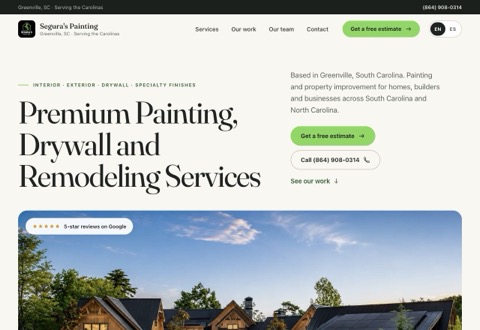
Small business
Segura's Painting
A services website for my family's painting business.
Read the project story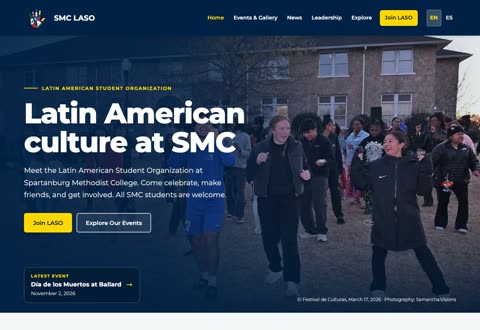
Student organization
LASO at SMC
A website for LASO's culture, events, and campus community.
Read the project story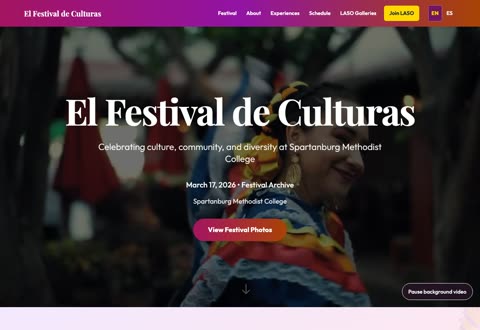
Campus event
El Festival de Culturas
Website and marketing support for another student's capstone.
Read the project storyThese projects were created before this capstone and are not counted toward its three new client websites.
03 / The goals
A clear definition of success.
These are targets for the six-week implementation, not completed results.
Project target
3
Bilingual websites
Launch three affordable, mobile-ready websites: two for Hispanic-owned small businesses and one for a church or community organization, with approved English and Spanish content.
Live links, client approvals, launch screenshots, and mobile checks.
Project target
6
Promotional placements
Create six promotional placements: two approved channels per client, such as QR print materials and social media.
A placement log, dated screenshots or photos, and verified links and QR codes.
Project target
9
Usability tests
I will test each website with people who have never seen it. Nine times, I will ask someone to find a service and a way to make contact, with no help from me. If they get stuck, that tells me what to fix.
Three participants per website. Target: at least 8 out of 9 participants succeed independently. I will record task outcomes separately from their feedback.
After launch: what I will measure
The targets above count what I deliver. These measures show whether the websites help each client. I record each starting point in the Week 1 interview, before anything is built.
| Client | Starting point (Week 1) | Compared at handoff, in early April, and at a 90-day follow-up |
|---|---|---|
| Each Hispanic-owned small business | How new customers find the business today and roughly how many inquiries arrive in a typical month, as the owner reports them. | Inquiries through the website, plus answers to “How did you hear about us?” on calls and estimate requests, recorded in the client outcome log. |
| The church or community organization | The questions people ask most often by phone or in person, such as service times, location, and events. | Whether visitors find those answers in English and Spanish during usability tests, and whether the organization reports fewer repeated questions. |
| All three clients | Who controls the domain and who can update the site today. | The client owns the domain and accounts, and the owner completes a sample update without my help. |
I will report only what clients approve and what I can verify. I will not estimate revenue or jobs created from these measures. The early-April check and the 90-day follow-up take place after the course ends, with each client's permission.
04 / The plan
From conversation to launch.
February 8 – March 28, 2027 in PDEV 430. The course counts six weeks. Spring break (March 8–12) falls between Weeks 4 and 5, and I will use it as a buffer for late content or approvals before launch.
Week 1: Scope & discovery
Meet with all three clients, agree on scope and approval responsibilities, and collect their content. Evidence: scope agreements, discovery answers, and content checklists.
Feb 8–14Open Week 1 discovery tool →Week 2: Bilingual content
Organize English and Spanish content, verify services and contact details, optimize photos, and get client approval. Evidence: approved copy and page plans.
Feb 15–21Week 3: First two builds
Build the first two sites and check mobile layouts, contact options, language switching, and accessibility. Evidence: preview links and documented checks, including any outstanding issues.
Feb 22–28Week 4: Third build & review
Build the third site, review all three with clients, and check both languages, links, and performance. Evidence: revision notes and approval-ready previews.
Mar 1–7Week 5: Launch & promote
Obtain final approvals, connect domains, launch all three sites, and activate two approved promotional channels per client. Set up or update Google Business Profiles where applicable. Evidence: live URLs, launch screenshots, and six verified placements.
Mar 15–21Week 6: Test, improve & hand off
Run nine usability sessions, record independent task results, fix observed problems, and train each owner. Evidence: observation sheets, a fix log, handoff notes, and the final results summary.
Mar 22–28Open Week 6 feedback tool →
Why three websites?
Building three websites gives me enough variety to compare the needs of two businesses and one church or community organization, while leaving time for client-approved English and Spanish content, accessibility checks, usability testing, and handoff. The six-week scope lets me document each project carefully and use feedback to improve the finished work.
Risks & planned responses
| Risk | Planned response |
|---|---|
| Client withdrawal | Business clients have committed, and a community organization is ready as a backup if a church cannot participate. I am talking with other organizations that could take the place of a client who withdraws, if they can meet the content deadlines. |
| Content and approval delays | Agree on content responsibilities, review deadlines, and essential launch content during discovery. |
| Requests beyond the agreed scope | Approve written scope and priorities before building; review additional requests against the available time. |
| The owner cannot maintain the site | Observe a sample owner update; document account access, renewals, backups, and support responsibilities. |
| Accessibility barriers remain | Combine automated checks with keyboard, zoom, and screen-reader tests; fix barriers and document testing limits. |
05 / Progress
Real milestones. A clear next step.
Partner confirmations and client progress are recorded below. Client results will be added as evidence is collected.
September 2026
All five partners are confirmed.
- Christian Bryant
- Yashuri Del Rosario Rodríguez
- Evelyn Lugo
- Dr. Araceli Hernández-Laroche
- Ramón Nieves-Lugo
The full partner group is now confirmed.
From advice to action
On October 5, 2026, all five key partners attended a recorded 32-minute group meeting with an agenda, minutes, and action items. The next group review is planned for spring; the date is not set.
A documented preparation example: Dr. Araceli Hernández-Laroche encouraged accessible text, contrast, image descriptions, and screen-reader access. I have made and documented changes on this portfolio website. Accessibility checks for the three new client websites remain part of the implementation plan.
See the accessibility work and testing limitsClient deliverables
Evidence recorded on this page
Counts below reflect evidence added here. These counts are for the six-week capstone period in spring 2027. The three websites that went online early are listed above. Launch, promotion, and testing records for the six weeks have not been added yet.
Website launches
0/ 3
launches documented
Three projects went online early
Promotional placements
0/ 6
placements documented
Awaiting active placements
Usability tests
0/ 9
tests recorded
Awaiting test records
Testing target: at least 8 of 9 participants find both the requested detail and a contact method without help.
06 / Evidence
How I will document the results
These are the records I will use during implementation. The downloads are blank templates, not completed evidence. Client results will be added after review and approval.
Client outcomes and follow-up
Use one record per client and checkpoint: Week 1, handoff, early April, and 90 days after launch. Record the observation dates, reported inquiries and referral sources, repeated questions, domain access, and any help needed with an owner update. Compare equivalent observation periods; leave unknown counts blank rather than entering zero. Record permission before follow-up and keep customer names and contact details out of this log.
Download the blank client outcome log (CSV)Preparation example: testing this portfolio website
Before the client implementation, I improved and tested this existing portfolio website. These results demonstrate preparation; they do not count as launches or usability outcomes for the three new client websites.
| Metric | Baseline | Later run |
|---|---|---|
| Mobile performance | 87 / 100 | 99 / 100 |
| Layout shift (CLS) | 0.236 | 0.001 |
| Largest Contentful Paint | 2.3 s | 2.0 s |
Both reports used Moto G Power emulation, Slow 4G, and Lighthouse 13.6.0. The later run recorded 1.0-second First Contentful Paint and zero Total Blocking Time. These are individual lab runs, not real-user field measurements or guaranteed future scores.
The changes included a fixed storage notice, smaller responsive images, compressed fonts, and fewer blocking stylesheet requests. I kept the bilingual content and contact tools, checked the rendered layouts, and compared the recorded results. Accessibility testing limits remain documented separately.
Client websites and launch evidence
For each of the three new sites, I will document the client-approved name, starting problem, my contribution, before-and-after images, live URL, approval date, and launch checks. Existing portfolio projects do not count toward this goal. No client launch records have been added yet.
Download the blank launch and handoff checklist (CSV)Six promotional placements
For each site, I will record two client-approved channels, the activation date, a screenshot or photo, the destination link, and the date I verified it. Printed QR materials will also be scanned and checked. Planned placements will not count as active placements.
Download the blank promotion log (CSV)Nine usability observations and fixes
I will recruit three people per site who have not seen it before. Each person will receive a specified service or organization detail to find, then find a way to contact the client. I will record the language, device, both task outcomes, and any assistance. An independent success requires both tasks without help; the target is at least eight of nine participants.
The original session outcome will remain separate from later retests. I will document problems, changes, and retest results. Feedback ratings provide context; they do not replace observed task results. No participant results have been recorded here yet.
Download the blank observation and fix log (CSV)Owner handoff and what I learn
Before handoff, I will walk each owner through content updates, domain control, agreed recurring costs and renewals, backups, and who to contact for support. Training notes and final sign-off will be stored with the project records.
After implementation, I will explain what client discovery taught me, which promotional choices worked, how I managed scope and deadlines, and what changed because of feedback. I will connect those examples to my Marketing & Sales studies, professional communication, and future work in Segura's Painting and Segura's Solutions.
Public summaries will use anonymous participant codes and approved client material. Signed approvals, contact details, and raw records will stay in the private Capstone Deliverables folder. The forms collect answers; they do not by themselves establish a launch, placement, or successful test.
Capstone data tools
Share your answers directly with me. Clients can complete the Week 1 questionnaire; test participants can give feedback after their Week 6 tasks. Both forms are available in English and Spanish, with official Microsoft Forms as an alternative.
Client discovery questionnaire
Services, audience, languages, existing pages, starting point, and approval responsibilities for each committed client.
Open discovery questionnaireUsability test feedback
Eight short questions for the nine test participants. No name or contact information is requested.
Open feedback formFeedback ratings do not establish task success. I will separately record whether participants found a service and a contact method without my help.
07 / Key partners
Five perspectives. One stronger project.
All five partners have agreed to advise and review. I am personally doing all the website building, client intake, and usability testing. Their advisory roles do not make them co-builders or imply institutional endorsement.
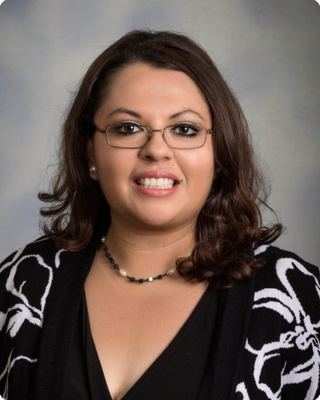
- PhD · UC Berkeley
- Four languages
- 2023 Akers Prize
Language, culture & accessibility
Dr. Araceli Hernández-Laroche
Professor of Modern Languages · Founding Director
USC Upstate · South Carolina Centro Latino
Academic depth. A lasting connection to the community.
Why this partner matters
Dr. Araceli Hernández-Laroche advises on language, culture, and accessibility. Her perspective helps me review bilingual content, readable text, contrast, image descriptions, and screen-reader access. I implement and test the changes.
Background & sources— Dr. Araceli Hernández-Laroche
Dr. Araceli Hernández-Laroche brings the perspective of a scholar, multilingual educator, and community leader. A UC Berkeley PhD who speaks four languages, she is Professor of Modern Languages at USC Upstate and the founding director of South Carolina Centro Latino.
Her work connects Latinx interdisciplinary studies, civic leadership, and multilingual public humanities. SC Humanities honored her with the 2023 Akers Prize for using culture and history to bring people together. That combination of scholarship and community engagement is especially valuable to a project built around language, access, and trust.
Her publications include work in Cambridge University Press's Journal of Public Humanities and a co-edited PMLA special topic on the theories and methodologies of public humanities. Her professional service includes the Modern Language Association's Ad Hoc Committee Valuing the Public Humanities and the SC Humanities board.
Her distinctions also include 2020 South Carolina Career Woman of the Year, 2024 Woman of Influence, and 2024 Advocate of the Year. These honors add to a career connecting university learning with public and community life.
Professional profiles & references
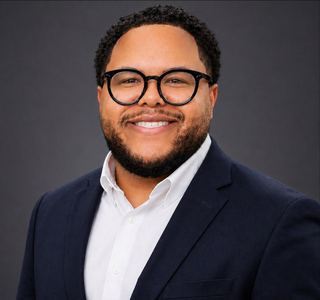
- Intune Technology Group founder
- Systems serving 1,500+ people
- Barrett Memorial Award
Tech & execution
Christian Bryant
Technology & Project Management Advisor
Founder & Principal Consultant · Intune Technology Group; former IT director at SMC
The experience to turn an ambitious plan into dependable work.
Why this partner matters
Christian Bryant advises on technology and execution: feasible scope, code quality, mobile performance, and launch preparation. He reviews and offers guidance; I build and manage the work.
Background & sources— Christian Bryant
Christian Bryant is Founder & Principal Consultant at Intune Technology Group. He brings hands-on technology leadership and the discipline of managing complex projects. As SMC's Director of IT Services and Operations and a project manager from 2022 to 2026, he led work across infrastructure, cybersecurity, digital learning, and support systems serving more than 1,500 students, faculty, and staff.
His experience covers the practical decisions behind reliable technology: planning upgrades, coordinating vendors, managing resources, and supporting the people who depend on a system every day. SMC also recognized his service with the Dr. James S. Barrett Memorial Award, which honors support for the college's fundraising efforts.
Before his director role, Christian worked in IT and audiovisual support at SMC and Limestone University. His background includes campus infrastructure modernization, classroom technology, end-user support, and coordination across technical and nontechnical teams.
He holds a Bachelor of Arts from Limestone University and is pursuing a master's degree in organizational leadership at Grand Canyon University. This combination of technical operations and leadership development is a strong fit for a capstone that must balance quality, scope, and deadlines.
Professional profiles & references
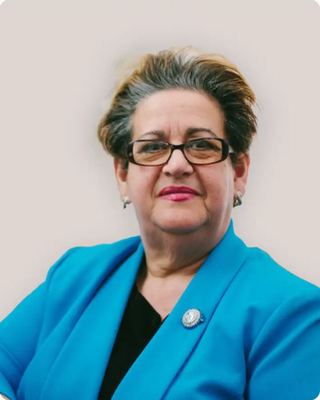
- Chamber founder · 2007
- Hispanic business advocacy
- Entrepreneur education
Business owners & affordability
Evelyn Lugo
President & Founder
South Carolina Hispanic Chamber of Commerce
A business advocate who understands the people this project serves.
Why this partner matters
Evelyn Lugo advises from the perspective of business owners and affordability. Her guidance helps me ask useful intake questions and keep the scope practical for small businesses. I conduct the intake and agree on the work directly with each client.
Background & sources— Evelyn Lugo
Evelyn Lugo founded the South Carolina Hispanic Chamber of Commerce in 2007 after recognizing how many Hispanic entrepreneurs needed better access to guidance, resources, and professional networks. As its president and founder, she has built a sustained platform for business education, opportunity, and community connection.
Her work is closely aligned with the purpose of this capstone: helping business owners communicate what they offer and take practical steps toward growth. Her experience offers a grounded understanding of the pressures facing entrepreneurs, including limited time, affordability, and access to useful support.
The Chamber's work includes education on starting and growing a business, administration, and marketing. Reporting on its partnerships also highlights efforts to connect entrepreneurs with capital and bilingual business support.
Her story shows the value of building an organization around a need observed firsthand. For this project, that is a powerful example of keeping solutions practical and grounded in the experiences of Hispanic business owners.
Professional profiles & references
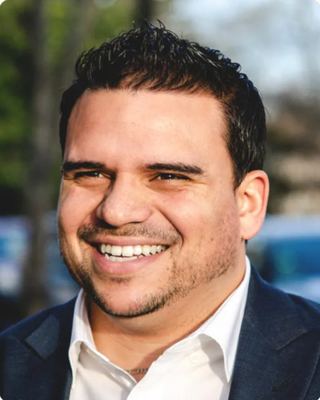
- UniComm Media Group co-founder
- MBA · Bob Jones University
- Hispanic-market specialist
Marketing & audience strategy
Ramón Nieves-Lugo
Principal, CEO & Co-founder
UniComm Media Group · Greenville, South Carolina
Marketing expertise built around the Hispanic audience.
Why this partner matters
Ramón Nieves-Lugo advises on marketing and audience strategy: service messages, clear next steps, and the two promotional channels each client approves. I create the sites and carry out the agreed promotional work.
Background & sources— Ramón Nieves-Lugo
Ramón Nieves-Lugo is the principal, CEO, and co-founder of UniComm Media Group, a Greenville advertising agency specializing in reaching Hispanic audiences. Born and raised in Puerto Rico, he came to the Upstate to study at Bob Jones University and earned an MBA before building the agency with his brother.
His experience connects entrepreneurship, branding, and culturally informed communication. UMG's work has reached national audiences, including a Brother International Hispanic campaign displayed in Times Square. That perspective helps connect a website's appearance with its message, audience, and purpose.
His community involvement also reflects a practical commitment to inclusion. At Fall for Greenville in 2016, he introduced an initiative in which multilingual volunteers wore language pins; more than 100 volunteers participated, representing over 15 languages.
That example is particularly relevant here: making people feel included often begins with a clear, useful signal that they can communicate in their own language. His agency and community experience bring that idea into a real business context.
Professional profiles & references
- English · Spanish · French
- Ronald E. McNair Scholar
- Winthrop Student Marshal
Communication & mentorship
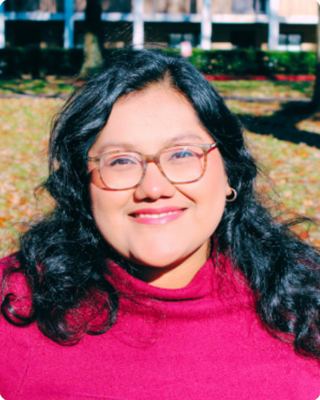
Yashuri Del Rosario Rodríguez
Assistant Director of Community Life · LASO Advisor
Spartanburg Methodist College
Multilingual communication and experienced capstone guidance.
Why this partner matters
Yashuri Del Rosario Rodríguez advises on communication and mentorship. Her guidance helps me follow through on commitments, communicate clearly with clients and my professor, and explain the capstone results. I handle the client communication and testing myself.
Background & sources — Yashuri Del Rosario Rodríguez
Yashuri Del Rosario Rodríguez serves as Assistant Director of Community Life at SMC and advisor to LASO. A 2021 Winthrop University graduate, she studied Mass Communication and Modern Languages, with a focus on journalism and French. She speaks English, Spanish, and French.
A Ronald E. McNair Scholar and Student Marshal at Winthrop, she combines a strong academic background with experience in student development and communication. She has also advised a previous capstone winner, bringing direct experience with the planning, accountability, and presentation that a successful project requires.
Her academic recognitions include Kappa Tau Alpha, the national journalism and mass communication honor society, and Pi Delta Phi, the national French honor society. Her work as opinion editor for The Roddey-McMillan Record adds practical experience in shaping clear, audience-focused writing.
Professional profiles & references
Expertise that works together.
Christian brings tech and execution; Ramón, marketing and audience strategy; Evelyn, business owners and affordability; Dr. Araceli, language, culture, and accessibility; Yashuri, communication and mentorship. They advise and review. I do the build, client intake, and testing work.
08 / Accessibility
Accessibility is part of the work.
Dr. Araceli Hernández-Laroche encouraged me to prioritize readable text, color contrast, meaningful image descriptions, and screen-reader access. She shared the W3C WCAG overview as a starting point.
Technical target: WCAG 2.2 Level AA, including all applicable Level A and AA criteria.
I am documenting before-and-after evidence, exact fixes, and a criterion-by-criterion checklist. Changes include clearer keyboard focus, readable pricing text, image-purpose review, semantic controls, form feedback, and layouts that support zoom and narrow screens.
Automated checks and keyboard/zoom tests are part of the evidence. Dedicated screen-reader and physical-device testing are still pending. This is progress toward accessibility, not a claim of full WCAG conformance or ADA certification.
The DOJ Title II web rule uses WCAG 2.1 Level AA for state and local public entities, including public educational institutions. After the April 2026 extension, the deadline is April 26, 2027 for entities serving 50,000 or more people (except special districts), and April 26, 2028 for smaller entities and special districts. This public-sector context reinforces the value of preparing now; it is not a blanket deadline for this private portfolio or every capstone client.
DOJ scope and deadlines (opens in a new tab)
Read the accessibility statement
W3C WCAG overview (opens in a new tab) · WCAG 2.2 standard (opens in a new tab)
The student behind the project
Jean Segura
Business Administration · Marketing/Sales · Spartanburg Methodist College · Expected May 2027
I'm a bilingual business student at SMC, originally from Costa Rica. My work with Segura's Painting and campus leadership connects customer communication, marketing, and web design. I want local businesses to have websites their customers can actually use.
View student profile & coursework Connect on LinkedIn (opens in a new tab)Have a connection or a suggestion?
If you know a business, church, or community organization that could benefit, or have feedback on the project, I'd like to hear from you.
Contact JeanOr email jsegura@segurassolutions.com